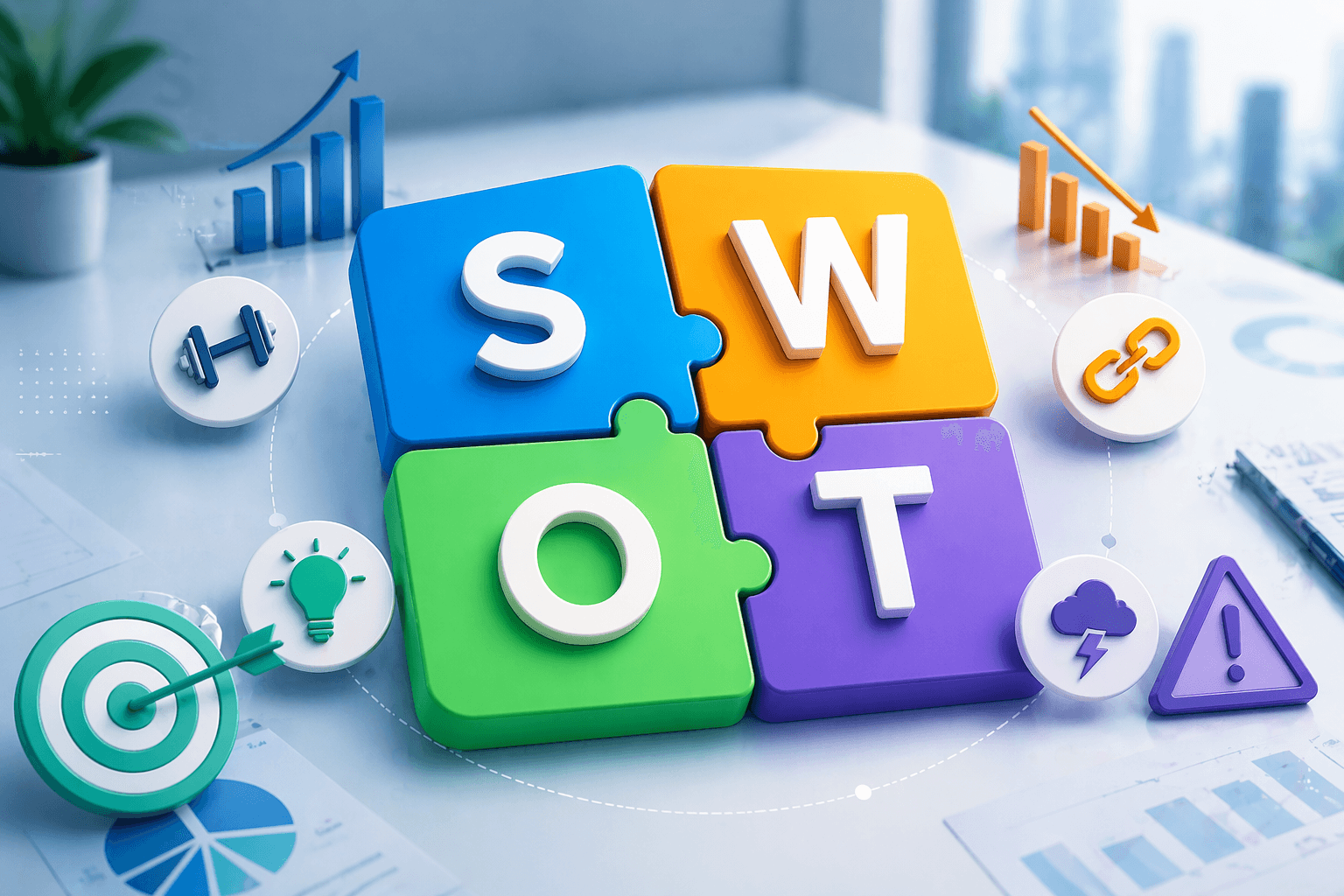
1. Introduction to SWOT
This is a method used to assess a company's competitive position, products and business strategy.
Investors can apply SWOT analysis to evaluate a company's potential, thereby making investment decisions regarding that company
1.1. The components of SWOT
a. STRENGTHS
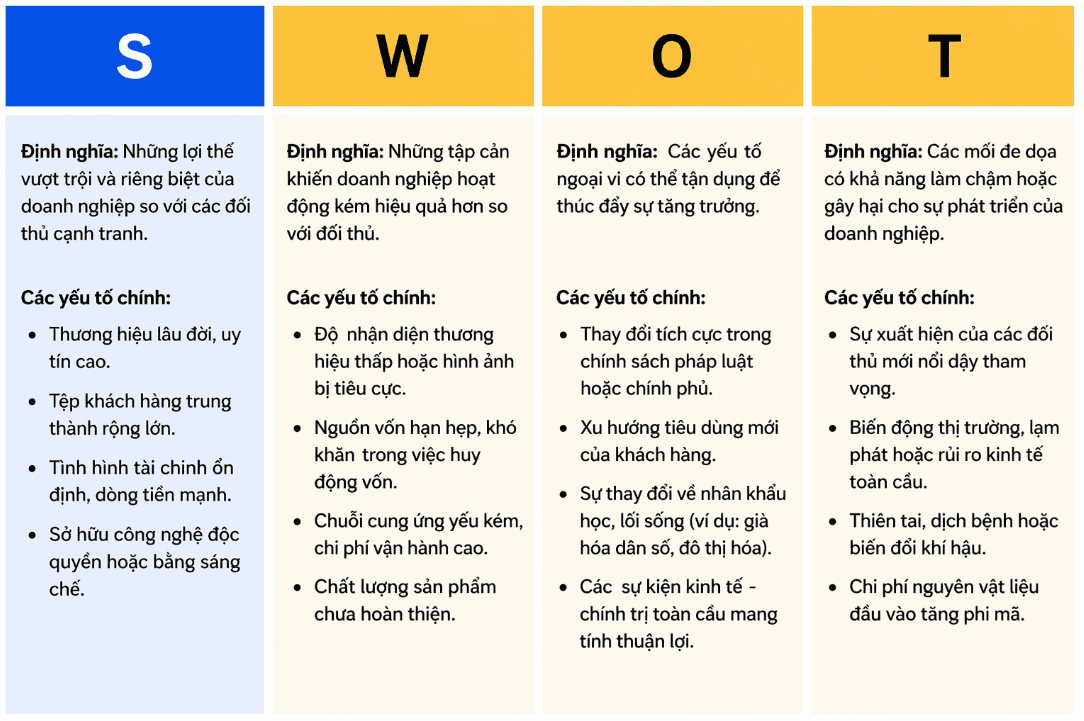
These are the outstanding and distinctive advantages a company holds over its competitors, such as a long-standing brand, a loyal customer base, a stable financial position, proprietary technology, etc.
Example: A company holds a monopoly position in providing a product or service, which gives it an outstanding advantage over rivals in the market and creates strength for the company.
b. WEAKNESSES
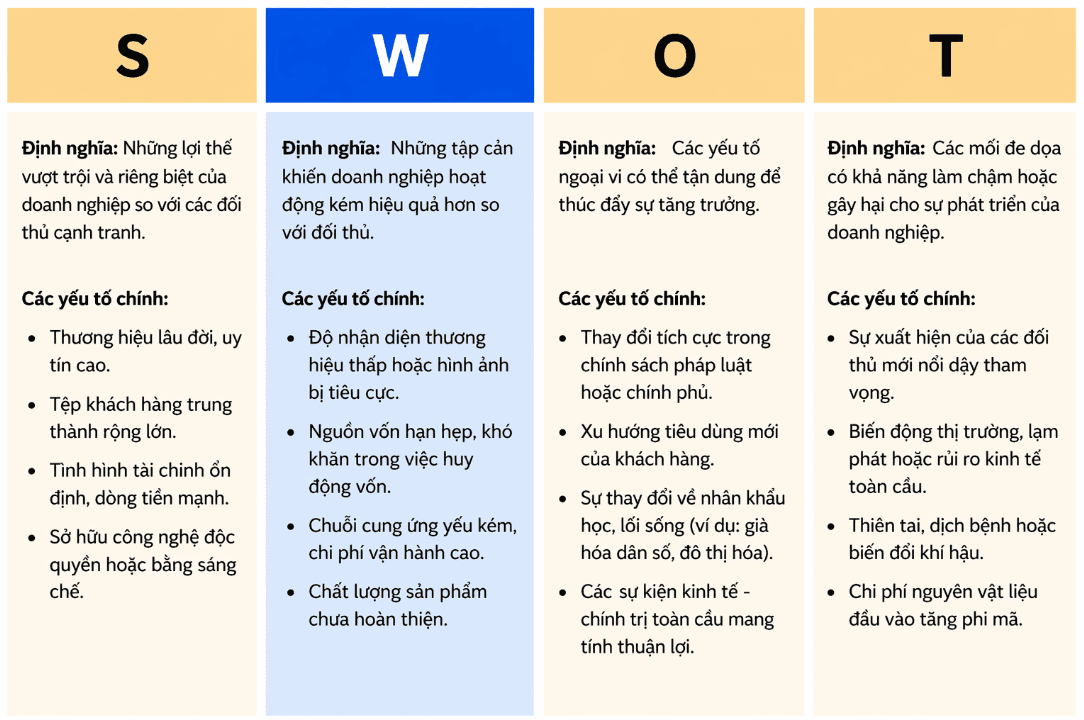
These are the shortcomings that keep a company from operating as effectively as its competitors. They are the weaknesses a company needs to improve in order to stay competitive, including: poor brand recognition, limited capital, an inadequate supply chain structure or products with many issues, etc.
Example: A company specialises in supplying mobile phones, but its phones charge more slowly than those of competitors in the market. This would be a major weakness for the company when customers compare its products with those of other rivals.
c. OPPORTUNITIES
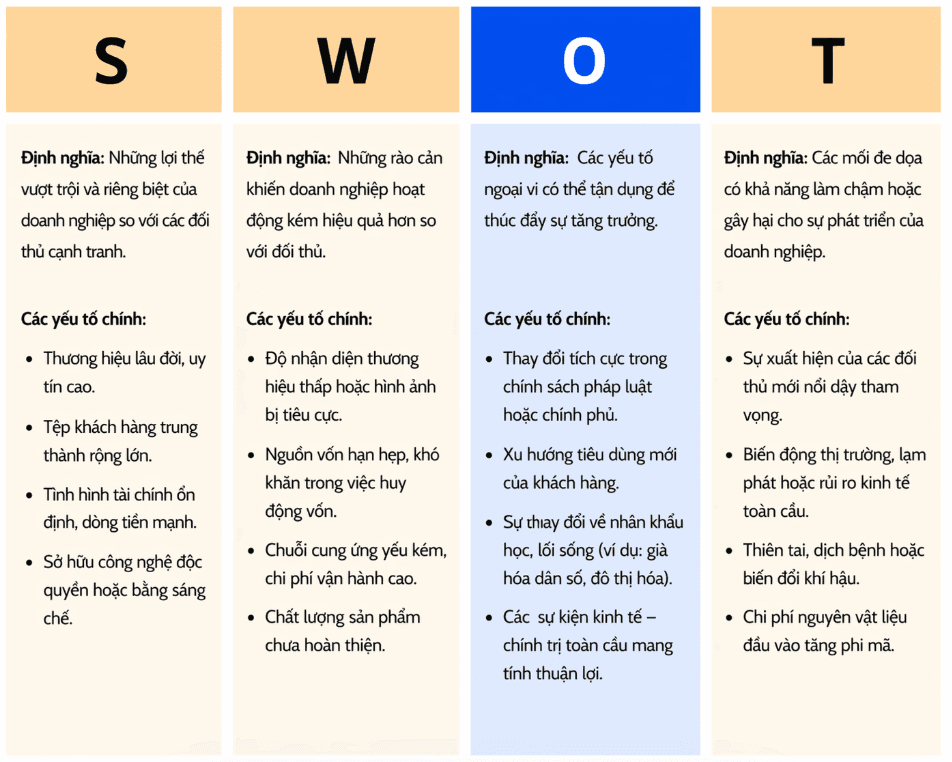
These are external factors that can bring growth opportunities to a company. For instance, market shifts, changes in government policy, changes in society, demographics and lifestyles; local and global events; customer consumption trends; etc.
Example: If a country cuts steel export taxes, steel exporting companies in that country will benefit from lower tax costs on exports.
d. THREATS
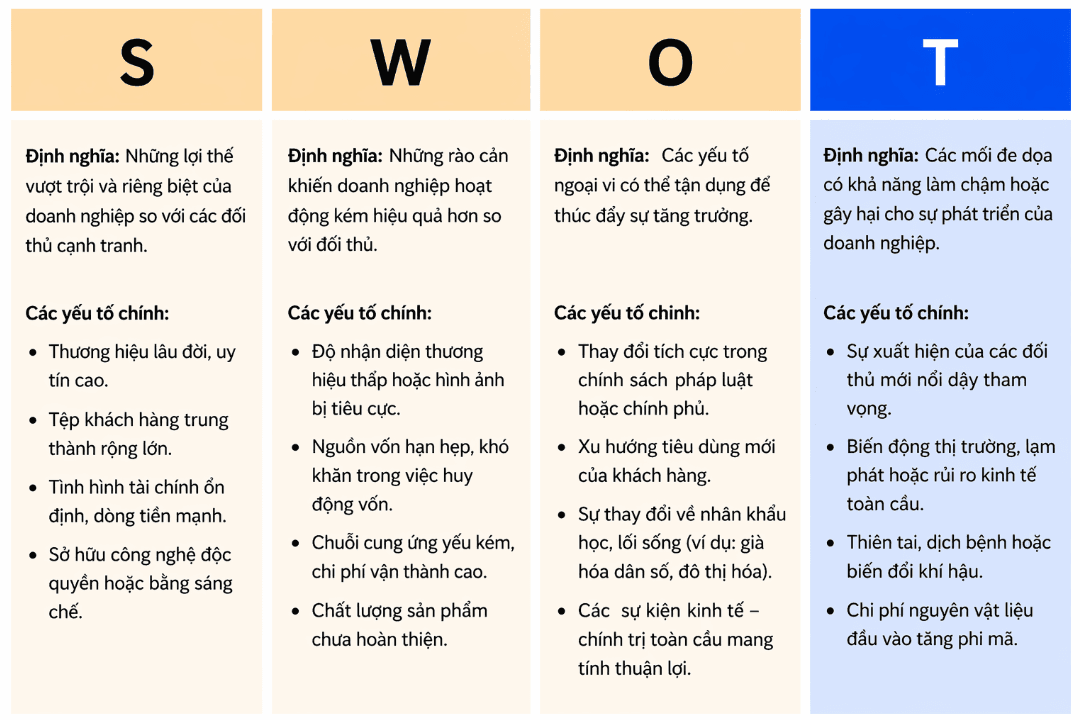
These are risks or threats that may curb a company's growth and development, including emerging competitors, changes in policy or legislation, global economic risks, market volatility, natural disasters, rising material costs, a tight labour supply, etc.
Example: Drought is a threat to food production and processing companies because it can destroy crops or reduce crop yields.
1.2. The importance of SWOT analysis

SWOT analysis is an important tool that gives investors the most comprehensive view of what is affecting a company's operating performance and success. This method helps investors:
- Determine the company's position in the current market.
- Assess the opportunities and difficulties the company is facing.
- Support the company in generating ideas to improve operating performance and build an overall strategy for the short and long term.
1.3. How to build a SWOT model
-
Examine internal factors
Internal factors include a company's strengths and weaknesses. These factors can be addressed easily if the company has sufficient financial and human resources.
When examining internal factors, the analyst should gather clearly disclosed internal data and information from reliable sources.
-
Assess external factors
Besides internal factors, external factors also have a strong impact on a company. External factors are usually harder to address because the company cannot directly control the outcome.
At this step, investors should take care to use information from reliable sources and avoid forming too many overly optimistic views.
1.4. Some suggested questions for building a SWOT model
a. Strengths
- What is the company's competitive advantage?
- What proprietary ideas or resources does the company own?
- Which of the company's products or services are performing well and are favoured by customers?
Note: You can use the USP (Unique Selling Point) to identify a company's strengths.
b. Weaknesses
- What causes the company to operate ineffectively?
- Which of the company's products or services need to be improved?
- Which resources does the company lack that competitors possess?
c. Opportunities
- Which technologies can the company apply?
- Can the company expand its business operations?
- Which new fields can the company enter?
d. Threats
- Which legal policies are changing?
- What new products or services are competitors developing?
- How are customer and market trends changing?
We hope Shinhan's investment knowledge has helped investors better understand the business results report
(!) This article is for informational purposes only and is not investment advice. Readers should conduct their own research or consult an expert before making financial decisions