
What is stock valuation using the comparison method?

Intro
In securities investing, a complex valuation model is not always necessary. The comparison method is a popular approach that helps investors quickly determine whether a stock is expensive or cheap by placing it in relation to other businesses or to its own history.
-
What is the comparative valuation method?
The comparative valuation method is a way of finding the fair value of a stock by comparing a company's valuation ratios with:
- Similar companies in the same industry
- The company itself in the past
From there, investors can determine whether a stock is overvalued, undervalued or fairly valued.
In addition, this method can also be applied by comparing the present with previous points in time to assess valuation trends.
-
Basis for applying the comparative valuation method
This method is based on a number of fundamental principles:
- Similar assets will have similar valuations
- Valuation ratios reflect market expectations
- Valuation history can be an important reference
Practical meaning:
- If the stock is below its historical level → it may be “cheap”
- If higher than the industry average → the market is expecting growth
- If lower than similar businesses → it may be an opportunity
-
Stock valuation using the P/E method
P/E (Price to Earning Ratio) is one of the most popular ratios.
Formula:

Meaning:
- High P/E → high growth expectations
- Low P/E → the stock may be undervalued
-
Stock valuation using the P/S method
P/S (Price to Sales Ratio) is often used when:
- The company is not yet profitable
- Profit fluctuates sharply
Formula:

Characteristics:
- Less affected by accounting than P/E
- Suitable for growth companies
- Serves as the foundation for many advanced methods
-
Stock valuation using the P/B method
P/B (Price to Book Ratio) measures the market price against book value.
Formula:
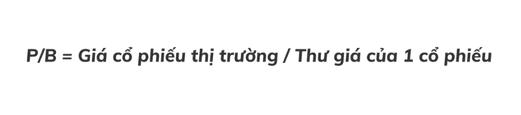
How to interpret:
- P/B > 1
→ The market expects future growth - P/B < 1
→ May be undervalued or facing problems
-
Stock valuation using the PEG method
PEG is an improved version of P/E that adds the growth factor.
Formula:

In which:
- PE is the P/E ratio.
- G: growth rate (%)
How to read it:
- PEG = 1 → fairly valued
- PEG < 1 → may be cheap
- PEG > 1 → may be expensive
-
Stock valuation using the EV/EBIT method
This is a whole-enterprise valuation method.
Formula:

In which:
- EV = Market capitalization + Debt − Cash
- EBIT = Earnings before interest and taxes
Meaning:
- Low EV/EBIT → the company may be cheap
- Normally < 10 is considered attractive
-
Methods of legendary investors
8.1 Benjamin Graham
Formula:
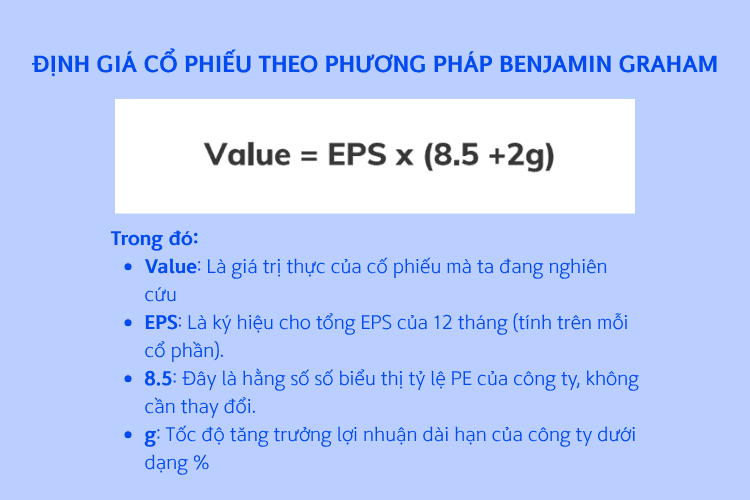
Meaning: provides a benchmark P/E for comparing valuations.
8.2 Peter Lynch & John Neff
Formula:
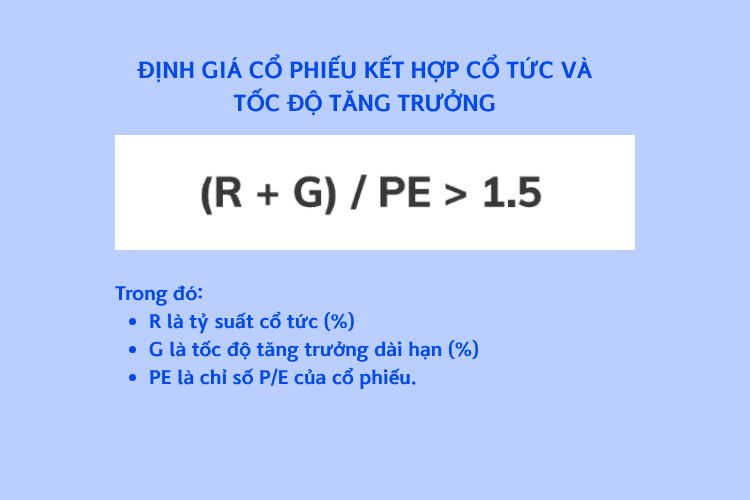
Meaning: helps find stocks with attractive long-term returns.
Conclusion
The comparative valuation method helps investors quickly identify opportunities in the market. However, to be highly effective, it is necessary to combine multiple ratios and clearly understand the company's context before making a decision.
We hope the investment knowledge from Shinhan has helped investors better understand the income statement
(!) This article is for informational purposes only and is not investment advice. Readers should conduct their own research or consult an expert before making financial decisions.