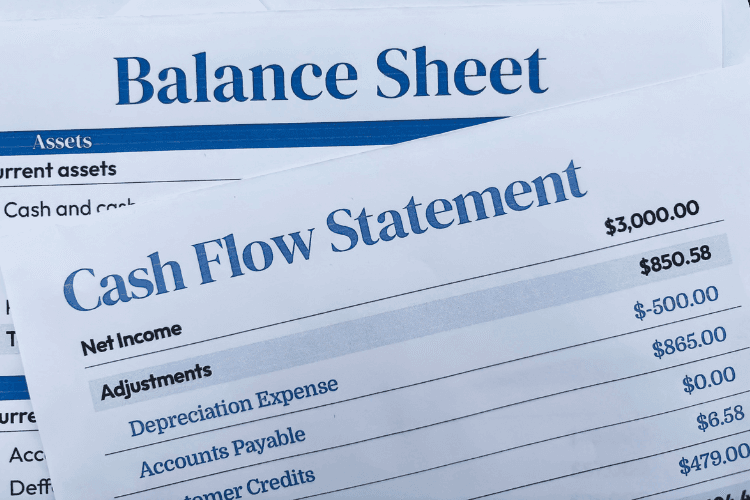
Financial statements are an important source of data that helps provide a comprehensive assessment of a company's operations. However, not everyone clearly understands how to read and effectively make use of the information in these reports.
Quick summary
- Financial statements provide information on a company's assets, liabilities, revenue and cash flow
- They comprise 4 main parts: Balance sheet, Income statement, Cash flow statement, Notes
- They help assess financial health and growth potential
- They are an important tool in analysis and investment decision-making
What are financial statements?
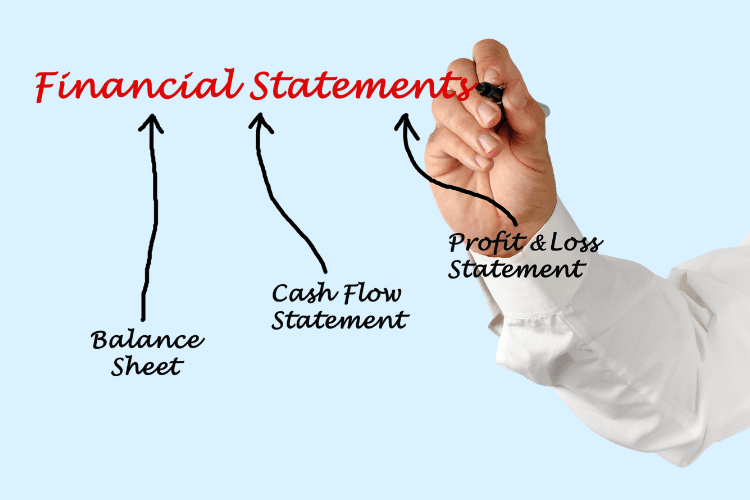
What financial statements are and their role in company analysis
Financial statements (FS) are a system of reports prepared by a company to provide information on its financial position and business performance over a given period.
These reports are commonly used by investors, banks and analysts to assess a company's operating efficiency and level of financial safety.
What do financial statements include?
1. Balance sheet
It gives an overall picture of a company's assets and capital sources at a specific point in time.
| Fundamental formula: Total assets = Liabilities + Owner's equity |
Main components:
a. Assets
- Short-term assets: cash, inventories, receivables (term < 1 year)
- Long-term assets: fixed assets, long-term investments
b. Liabilities
- Short-term liabilities
- Long-term liabilities
c. Owner's equity
- Contributed capital
- Retained earnings
- Funds
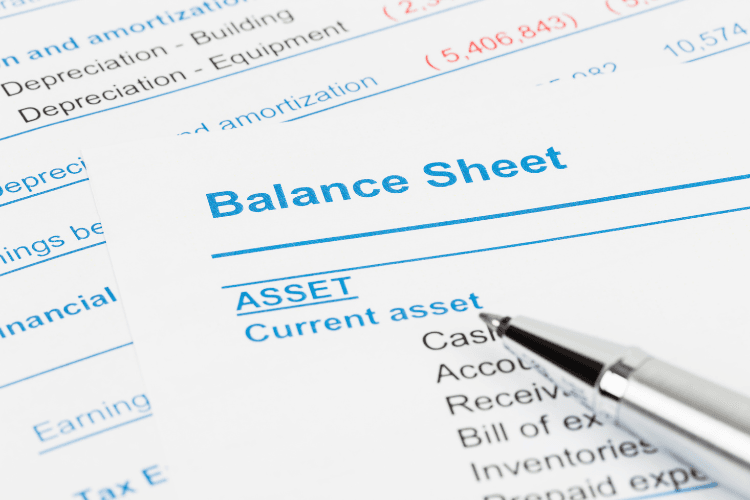
Balance sheet of assets, liabilities and capital
2. Income statement
It shows a company's revenue, expenses and profit over a period (quarter or year).
Basic formula:
Profit = Revenue – Expenses
Main components:
- Revenue
- Revenue from core business activities
- Financial income
- Expenses
- Cost of goods sold
- Selling expenses
- General and administrative expenses
- Financial expenses
- Other income: Non-recurring income

3. Cash flow statement

It reflects a company's cash inflows and outflows, helping assess its actual ability to generate cash.
It includes 3 cash flow groups:
| 1. Cash flow from operating activities | 2. Cash flow from investing activities | 3. Cash flow from financing activities |
| Cash receipts and payments from core activities | Related to the purchase/sale of assets and long-term investments | Includes borrowings, debt repayments and dividend payments |
4. Notes to the financial statements
This is the section that explains in detail the figures in the 3 statements above.
Main contents:
- Characteristics of the company's operations
- Accounting policies applied
- Detailed explanations of line items
- Important supplementary information

How to recognise and apply this when reading financial statements
- Start with the Balance sheet → See whether the company is "healthy" in terms of assets and capital structure
- Check the Income statement → See whether the company generates sustainable profit
- Cross-check against the Cash flow statement → See whether profit comes with real cash flow
- Read the Notes → Clearly understand the nature of the figures and avoid misinterpretation
4. Notes and common mistakes
- Looking only at profit while ignoring cash flow
- Not comparing multiple periods
- Not reading the notes
- Assessing a company based on only 1 statement
Understanding and correctly reading financial statements helps improve the quality of analysis and limit risks in investing.
(!) This article is for knowledge-sharing purposes only and is not an investment recommendation.