
Sideways is one of the market conditions that leaves new investors perplexed when trading stocks. A sideways market typically appears as a horizontally oscillating chart, which makes it difficult for investors to make predictions and decisions. Join Shinhan in exploring the stock market conditions that new investors should be aware of and how to manage their money throughout the investment process.
What are sideways/downtrend conditions in the stock market?
Sideways, also referred to as a "flat" condition, occurs when a security's price stays within a stable range and does not form any specific trend. The rise or fall of the security's price does not occur continuously. Instead, a sideways condition usually marks a period of stability, preparing for a specific subsequent uptrend or downtrend.
A sideways period can last from a few months to a full year, during which the price chart shows no clear sign of any significant increase or decrease. This can make it difficult for investors to make trading decisions in their approach to trading stocks.
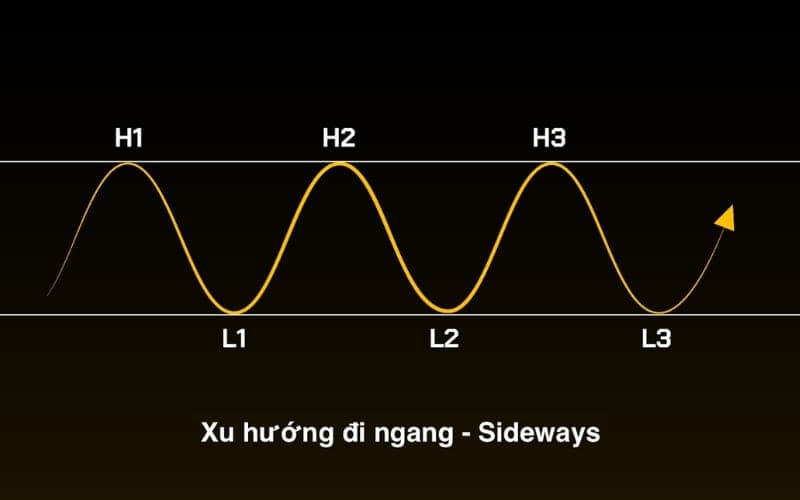
Sideways is one of the market conditions that leaves new investors perplexed when trading stocks.
A sideways phase usually ends when the security's price breaks through a support or resistance level to pursue a new trend. Because there is no major price volatility, investors often find it hard to decide when to buy or sell. To generate profits during a sideways phase, the stock investment approach commonly used by investors is to closely monitor market movements and identify potential opportunities to buy or sell as they arise.
How to recognise that the market is in a sideways/downtrend condition when trading stocks
Sideways movement often appears when a stock price is approaching the peak or trough of an uptrend or downtrend. To recognise a sideways condition, investors can observe the chart over a longer time frame, for example from 1 hour upwards. At that point, you look for signs that the price repeatedly fluctuates up and down at support and resistance levels without any clear breakout.
Specifically, a sideways phase usually begins when an uptrend or downtrend ends, after the price has reversed at least 4 times but has yet to form a new peak or trough. Typically, this sideways trend repeats 3 times and plays out between support and resistance levels.
A sideways condition can be broken when there is a large enough shift in supply and demand, leading to more pronounced price jumps, or when positive information affects the stock. After the sideways phase ends, the market may move into an uptrend or a downtrend.
Sideways movement often occurs during periods such as before Tet or public holidays, when market trading activity typically declines. A sideways condition is usually confirmed when a strong reversal candlestick pattern appears on the chart.
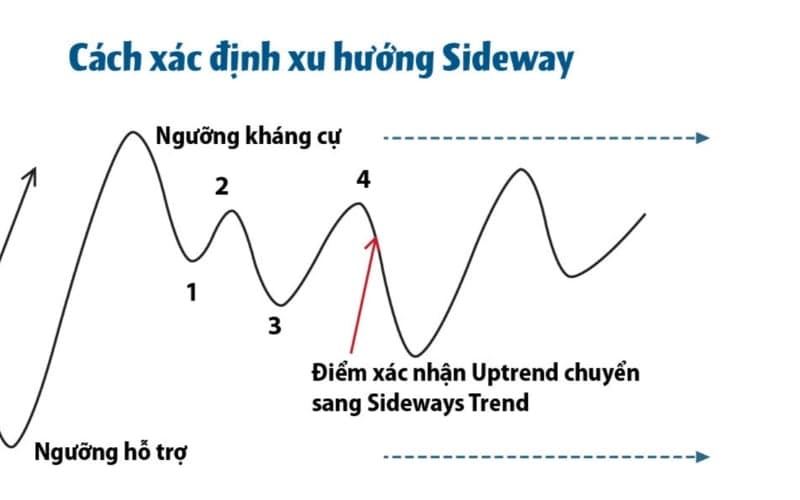
How to identify a sideways trend
A guide to trading stocks when the market is in a sideways/downtrend condition
When the market is in a sideways condition, this is usually the time when investors need to adhere to a number of important principles. The following stock trading guide can help you get through this phase.
Invest in line with the market trend
Sideways conditions usually last a few days; however, they can extend to months or even a full year. In an inflationary environment, if a stock price remains at a stable level for many months, this may indicate that investors are incurring losses without realising it.
Therefore, deciding on the right time to invest is important in order to minimise risk and optimise returns. Investors should consider buying or selling stocks when signs emerge that the market is starting to break out of the sideways condition, as this is usually when a new trend begins to form.
Use cash effectively
Stocks in a sideways phase usually fluctuate within a specific price range without significant movement. Therefore, holding cash can help investors look for potential investment opportunities with clearer trends. This cash can be used to identify effective investment options.
Increase the safety margin
A sideways market usually operates within a relatively narrow band between two support and resistance levels, creating a sense of stability and safety for investors when trading stocks. However, this is not always the case. When a sideways market is broken, stocks can rise or fall sharply.
Therefore, in addition to monitoring support and resistance levels in a sideways market, investors should also consider increasing their protective margin to about 10% relative to the band between the support and resistance lines. This will help protect investors' capital more effectively when the market experiences strong volatility.
Seize profit opportunities when the market moves flat
In a sideways market condition, investors often struggle to predict trends and make investment decisions. However, if you apply appropriate methods, there are still opportunities to earn profits from a sideways market. Among them are two common methods:
- Profiting within the range: This is an approach to trading during a sideways phase by buying at low prices and selling at high prices, taking advantage of the price differential.
- Watch for breakouts/breakdowns: During a sideways phase, the market may break out of or break down from the current range. The longer the sideways phase lasts, the stronger the volatility of the breakout will be. Investors need to keep observing market movements in order to correctly anticipate the moment the market breaks out of or breaks down from the sideways range.
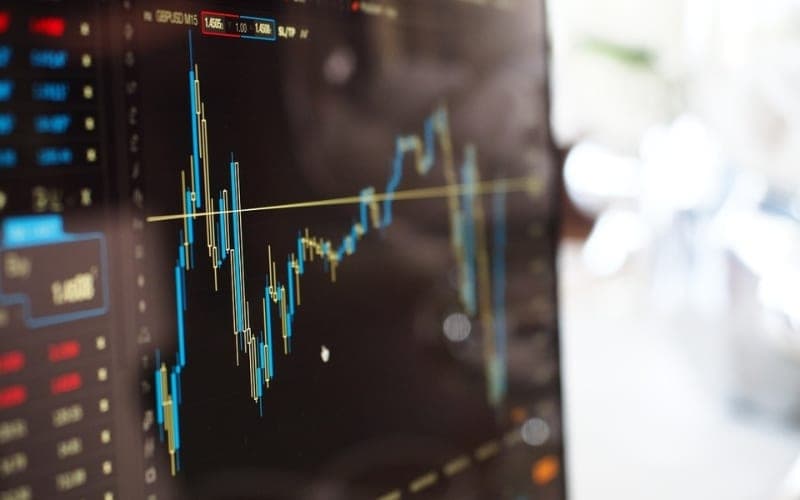
Seizing profit opportunities when the market moves sideways
Points to note when investing in the market during a sideways/downtrend period in order to make a profit
Before entering the stock market, investors need to learn stock investing in a methodical way to avoid being led by the crowd. When the market is in a sideways/downtrend period, investors should note the following in order to achieve profits:
Choose a suitable investment strategy
Depending on their stock trading objectives and their own risk tolerance, investors can choose different investment strategies when the market is in a sideways/downtrend period. Below are some strategies you can consider:
- Wait-and-see strategy: At this point, investors should wait for the market to establish a clear trend before making buy or sell decisions. This strategy suits investors with low risk tolerance and a long-term investment horizon.
- Value investing strategy: Investors can choose to invest in stocks priced below their intrinsic value. This strategy suits investors with financial analysis skills and a medium- or long-term investment horizon.
- Short-term investment strategy: Investors should buy and sell stocks based on technical signals. This strategy suits experienced investors with a high risk tolerance.
Prepare a steady mindset
Sideways/downtrend markets are often prolonged and hard to predict. Therefore, investors need to prepare a steady mindset to avoid unwise decisions.
- Understand the risks clearly: Investors need to clearly understand the risks of investing in a sideways/downtrend market in order to make sound investment decisions.
- Be patient: Sideways/downtrend markets are often prolonged, so investors need to patiently wait for opportunities to trade securities at reasonable prices.
Closely monitor market developments
A sideways/downtrend market is an unpredictable, volatile period. Therefore, investors need to closely monitor market developments in order to make timely investment decisions.
- Monitor macroeconomic indicators: Macroeconomic indicators can affect the trend of the stock market.
- Monitor news related to the stock market: News related to the stock market can affect investor sentiment and lead to market volatility.
The above is the information investors need to equip themselves with when a sideways condition occurs while trading stocks. We hope that through this article, investors will better understand the concept of sideways markets, how to identify them, and how to minimise risks and optimise opportunities for large gains amid stock market volatility.
Shinhan is one of Korea's largest banks, with more than 30 years of experience in the financial sector. Shinhan Securities Vietnam (SSV) has a team of experienced financial analysts, providing clients with comprehensive and professional stock investment services. Choose and trade stocks at Shinhan Securities Vietnam (SSV) today!