
In securities investing, the ultimate goal is always profit. But the market is always volatile and full of risks, and investors must face the possibility of a "blown account" threatening their investment assets. In this situation, "cutting losses" becomes extremely important. So what is cutting losses in securities and how can you make a smart decision? Let's explore the details with Shinhan Securities Vietnam (SSV) in the content below.
What is cutting losses in securities investing?
Cutting losses in securities is a safety measure in securities investing. Simply put, it means selling shares when they are declining in price or falling sharply, in order to recover part of the invested capital and avoid a situation where losses keep mounting.

Cutting losses helps investors protect their capital, minimize risk and improve their rate of return.
Typically, investors cut losses when the purchase price of a stock is higher than the market price at that time and when negative information about the company appears or the entire market is trending downward. When these conditions occur, investors usually set a specific risk tolerance threshold (for example, -5%, -10%). If their loss ratio reaches or exceeds this threshold, they usually decide to cut losses.
Example: Suppose an investor buys 100 shares of Company X at 10,000 VND per share. The investor sets a stop-loss level of 5%, equivalent to 500 VND per share. After some time, the share price of Company X falls to 9,500 VND per share. At this point, the investor should cut losses to limit the maximum loss to 500 VND per share. If the investor does not cut losses and lets the share price fall to 9,000 VND per share, the loss will be 1,000 VND per share.
Investors should determine a stop-loss level in trading appropriate to the risk level they have set and stay firm with the decision to cut losses when necessary.
Should you cut losses in securities or not?
Cutting losses is an important investment strategy that helps investors protect their capital, minimize risk and improve their rate of return. Below are some advantages and disadvantages of cutting losses in securities:
Advantages of cutting losses
-
Protecting capital: Cutting losses helps investors limit their maximum loss when the market declines. Without cutting losses, investors may suffer larger losses, even losing everything.
-
Minimizing risk: Cutting losses helps investors reduce the risk of their portfolio. When an investment is at a loss, cutting losses helps investors focus on investments with better prospects.
-
Improving the rate of return: Cutting losses helps investors reduce the time and cost of recovering from losses. This gives investors more time and capital to seek profitable investment opportunities.
Disadvantages of cutting losses
-
Missed opportunities: Cutting losses may cause investors to miss opportunities if the market then returns to a strong uptrend. However, this is quite rare.
-
Psychology: Cutting losses can be a psychologically difficult decision for investors, especially those new to the market.
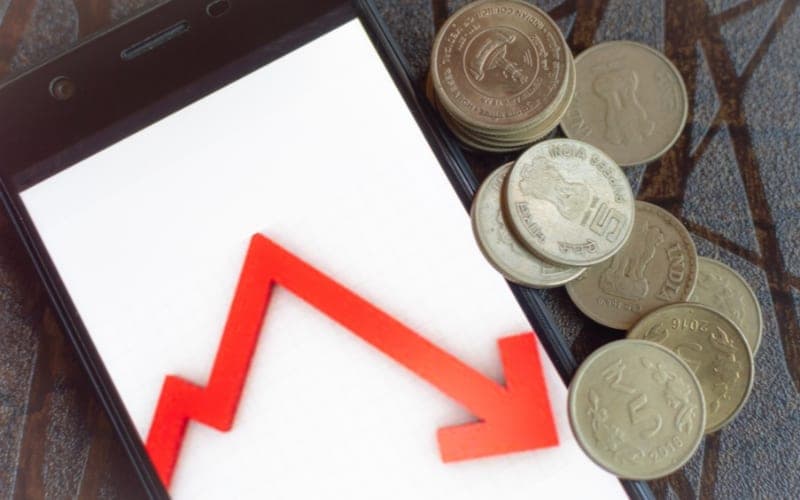
Cutting losses helps investors limit their maximum loss when the market declines.
When should you cut losses? Investors should cut losses when the share price falls to a certain level compared with the purchase price. This stop-loss level can be determined based on several factors, including:
-
Maximum acceptable loss: Investors should determine in advance the maximum loss they can accept. When the share price falls to this level, investors should cut losses to protect their capital.
-
Technical analysis: Investors can use technical indicators to identify potential stop-loss points.
-
Financial situation: If investors do not have enough capital to offset losses, they should cut losses to minimize risk.
Important principles for cutting losses in securities
There are many ways to place a stop-loss order in securities. However, each investor needs to follow stop-loss rules that suit their own situation and personal views. Everyone has their own approach to investing, based on mindset, patience, risk tolerance and other factors.
However, cutting losses in securities should not only happen when a stock falls to the loss level you have set. What matters is that you need a specific plan to minimize damage as soon as you realize your mistake. This requires sharpness and the ability to make timely decisions to ensure effective investing. Even when your portfolio is in profit but you anticipate it will lose value in the future, cutting losses is also the optimal option to protect your assets.
Think of losses as paying an insurance premium to participate in investing in the stock market. Even if the share price rises after you have sold, you have no reason to regret it. Your ultimate goal is to keep losses at a safe level, so that you have money to invest in better opportunities in the future.

Cutting losses should not only happen when a stock falls to the predetermined loss threshold.
Cutting stock losses based on a percentage
As mentioned earlier, investors usually cut losses based on the rate of decline compared to the purchase price, that is, a specific percentage. This percentage may be 5%, 10%, 15%, or any value suited to each investor's risk tolerance. Through this method, you will know exactly when to cut losses and can calculate the amount of loss you will have to bear.
Cutting stock losses based on technical analysis
The method of cutting losses based on technical analysis usually uses technical charts to determine the securities trading time at which the loss should be cut. Specifically, this includes observing the stock price within support or resistance zones. If the price breaks through these thresholds, this may be a signal to cut stock losses.
Many investors also use technical indicators such as past peak and bottom price levels, moving averages, trendlines, and even consider market supply and demand at specific price levels to make decisions about cutting losses.
How to determine the stop-loss point in securities
A common method for determining the stop-loss point is based on the moving average (MA). In this strategy, investors often use moving averages with different periods, such as determining the MA of 5, 9, 20, 50, 100 and 200 days. By observing stock prices and comparing them with the support and resistance thresholds on the moving averages, investors can determine whether the stock has reached a certain threshold.
Another method is to use the trendline to determine support or resistance thresholds. If the stock price breaks through these zones with large trading volume, this may indicate that the stock's trend may be changing. In this case, investors should consider exiting their investment position and placing a stop-loss order just below the important support zone to protect their account.
Summary
We hope this article has helped you understand the meaning of cutting stock losses, how to determine the most effective stop-loss point, and how to invest in securities for beginners. However, to do this, investors need in-depth knowledge and must conduct market analysis regularly in order to forecast market trends.
Shinhan Securities Vietnam (SSV) is one of the leading securities companies in Vietnam with more than 20 years of experience. Shinhan Securities Vietnam (SSV) provides a diverse range of securities products and services, including securities trading, research and analysis, training and consulting. With its reputation, professionalism and diverse products and services, Shinhan Securities Vietnam (SSV) is an ideal choice for securities investors. Choose Shinhan Securities Vietnam (SSV) - a reputable and professional place for securities investment.